- Advance Genie
- Posts
- The Year Alternative Finance Became Mainstream: 2025 in Review
The Year Alternative Finance Became Mainstream: 2025 in Review
December 10 made it official. Everything else followed.
Welcome to Advance Genie, the newsletter that helps operators in high-friction industries find smarter paths to capital.
On December 10, 2025, the Office of the Comptroller of the Currency released findings confirming that the nine largest U.S. banks had engaged in "inappropriate distinctions among customers in the provision of financial services on the basis of their lawful business activities" between 2020 and 2023.
This wasn't advocacy. This was federal documentation that systematic banking discrimination had occurred - followed by concrete remediation.
2025 was the year the policy direction reversed. While operators spent a decade being told their industries were "too risky" for banks, 2025 systematically dismantled those barriers through legislation, regulatory reversals, and market validation.
Here's what fundamentally changed.
📬 Enjoying Advance Genie?
We're a small newsletter trying to reach/help founders and operators in high-friction industries.
If you find this useful, please forward this edition to someone who might benefit - a fellow founder, a friend, colleague, or anyone interested in these topics.
Thank you for helping us. 🙏
From Congressional Hearings to Federal Action
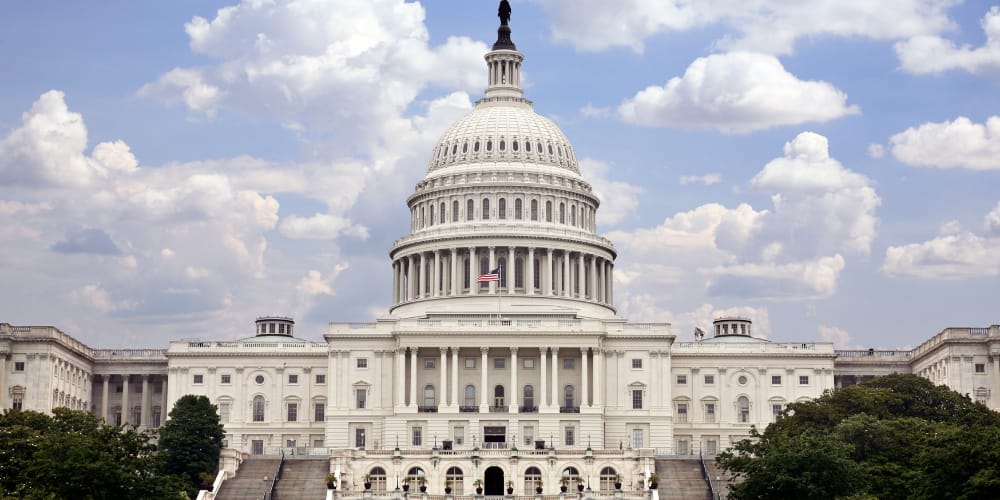
The debanking reversal didn't happen overnight. It followed a clear escalation path.
February 5-6: Senate Banking and House Financial Services committees held back-to-back hearings titled "Operation Choke Point 2.0." The hearings documented allegations that federal regulators had pressured banks to drop crypto clients by threatening enhanced supervision.
November 25: The House Financial Services Committee released a staff report confirming the allegations. The report detailed how regulators used "reputational risk" guidance between 2021-2023 to force banks away from lawful businesses.
December 10: The OCC findings made it official. Nine banks confirmed. Multiple industries affected beyond crypto.
The response was systematic:
August 7: President Trump signed an executive order directing regulators to eliminate "reputational risk" from bank supervision and guaranteeing fair banking access for lawful businesses.
August 26: The Small Business Administration ordered 5,000+ lenders to identify instances where they denied services based on industry classification rather than individualized risk. Compliance deadline: December 5, 2025. Penalty for non-compliance: loss of SBA good standing.
December 12: The OCC granted conditional approval for five national trust bank charters to crypto firms: Circle, Ripple, Paxos, BitGo, and Fidelity Digital Assets. These companies can now operate as federally regulated banks without relying on partner institutions that view crypto relationships as disposable.
Banking access won't improve overnight, but the regulatory pressure now flows in the opposite direction. Banks spent three years being told to avoid certain industries.
That guidance is now officially reversed with enforcement teeth.
Stablecoins Got Federal Recognition

The GENIUS Act passed the Senate 68-30 on June 17 and became law on July 18, 2025.
The legislation established what the market needed: clear rules.
Payment stablecoins require 100% reserve backing in cash or Treasury securities. They're explicitly not securities or commodities, removing regulatory ambiguity. Both banks and non-bank entities can issue them under federal supervision.
Large issuers get federal preemption over state regulations.
The market responded immediately:
June 5: Circle completed its IPO, raising $1.05 billion at an $8 billion valuation. BlackRock bought 10%. USDC's market cap grew from $44 billion to $74 billion over the year (+68%).
May 30: Stripe acquired Bridge for $1.1 billion, its largest acquisition ever. Bridge provides stablecoin infrastructure for businesses to accept, store, and send payments.
September 30: Stripe launched Open Issuance, enabling any business to create custom stablecoins using Stripe's infrastructure.
December 19: Visa launched USDC settlement in the United States. Issuers and acquirers can now settle Visa network obligations using USDC on Ethereum and Solana, eliminating multi-day ACH delays.
Stablecoin market cap grew from $205 billion (January) to $309 billion (December), a 51% increase.
Transaction volume exceeded $18 trillion in 2024 and accelerated in 2025, surpassing Visa's total annual volume.
For operators facing payment processor discrimination, stablecoins now provide a viable alternative. When Stripe supports 101 countries and Visa settles in USDC, these aren't experimental tools.
They're mainstream infrastructure.
Alternative Lending Proved Profitability

After brutal 2022-2023 retrenchments driven by rising rates and tight credit, major platforms demonstrated sustainable unit economics in 2025.
Klarna's $15 billion IPO on September 10 was the validation moment. The stock jumped 30% on debut. It was 2025's largest U.S. public offering and proved that buy-now-pay-later companies can achieve scale and profitability without becoming banks.
Affirm reached its path to GAAP profitability in 2025, reporting Q2 revenue of $866 million (+47% YoY) on February 6. The company extended its Amazon partnership through 2031 on November 6, securing its largest distribution channel for six years.
Funding Circle posted its first profit in September: £6 million for H1 2025. After years of losses, the UK marketplace lender proved the model works at scale through tighter underwriting and AI-powered credit models.
The revenue-based financing segment showed the strongest growth.
The RBF market grew from $5.77 billion (2024) to $9.77 billion (2025), representing 69% year-over-year growth. Projections show the market hitting $67.7 billion by 2029, a 62.3% compound annual growth rate, making it the fastest-growing alternative lending segment.
Wayflyer deployed $5 billion in total capital and achieved profitability in multiple markets. The company expanded beyond e-commerce into retail, SaaS, and healthcare in October.
Capchase acquired Vartana on June 24, combining SaaS financing with hardware vendor financing. The platform has deployed over $2.5 billion and now provides embedded financing for B2B vendors.
Lighter Capital secured a $100 million credit facility from i80 Group in November, demonstrating institutional investor confidence in well-managed RBF platforms.
The approval rate gap is the reason for the explosive growth - alternative lenders approve 71% of small business applications. Large banks approve 14%.
That 5x difference drives 75% of small businesses to bypass traditional banks entirely.
Three Banking Regulators Withdrew Crypto Restrictions

The regulatory reset happened quickly once it started.
March 7: OCC withdrew crypto guidance
March 28: FDIC withdrew crypto guidance
April 24: Federal Reserve withdrew crypto guidance
All three regulators eliminated requirements for banks to seek prior approval before engaging in crypto custody, stablecoin operations, or blockchain payments. Banks could now participate without multi-year approval processes that had discouraged earlier entrants.
The Section 1071 small business lending data rule got similar relief. On October 2, the CFPB extended compliance deadlines by a year, with Tier 1 lenders now facing July 2026 deadlines instead of 2025.
On November 13, the CFPB proposed raising reporting thresholds from 100 to 1,000 annual transactions and potentially exempting merchant cash advances entirely. If finalized, thousands of smaller lenders would avoid reporting requirements while larger institutions maintain coverage for systemic pattern identification.
On June 20, the CFPB withdrew a proposed rule classifying buy-now-pay-later products as credit cards. The withdrawal eliminated compliance burdens that would have required BNPL providers to implement credit card-style disclosures and dispute mechanisms inappropriate for 4-6 week installment products.
On December 19, Federal Reserve Governor Christopher Waller proposed "skinny master accounts" that would give fintechs and stablecoin issuers direct access to Fedwire and ACH without requiring full bank charters. The accounts would have limitations (no interest, balance caps, no overdrafts) but provide the core capability: direct federal payment infrastructure access without partner bank dependency.
Expected implementation: late 2026 if finalized after stakeholder feedback.
Despite state complexity, 2025 created the most favorable federal regulatory environment for alternative finance since before Operation Choke Point in 2013.
The Numbers That Matter
Stablecoins:
Market cap: $205B → $309B (+51%)
USDC growth: $44B → $74B (+68%)
PYUSD growth: $500M → $2.5B (+400%)
Transaction volume: >$18 trillion (exceeded Visa's annual volume)
Alternative Lending:
Revenue-based financing: $5.77B → $9.77B (+69% YoY)
RBF projected 2029: $67.7B (62.3% CAGR)
Alternative lender approval rate: 71%
Large bank approval rate: 14%
Small businesses bypassing banks: 75%
Major Deals:
Klarna IPO: $15 billion valuation (largest 2025 U.S. IPO)
Circle IPO: $1.05 billion raised at $8B valuation
Stripe-Bridge acquisition: $1.1 billion
Capchase-Vartana acquisition: Undisclosed, $2.5B+ deployed combined
Lighter Capital credit facility: $100 million
Policy Actions:
Banks confirmed engaging in debanking: 9
Crypto bank charters approved: 5
Lenders ordered to end debanking: 5,000+
Banking regulators withdrawing crypto restrictions: 3
Federal Reserve rate cuts: 3 (to 3.50%-3.75%)
What Opens Up in 2026
Banking access improves gradually. The policy reversal is real and enforced, but institutional culture changes slowly.
Expect 2-3 years for meaningful improvement, with smaller banks and credit unions moving faster than large institutions.
Stablecoin payments are now practical tools.
Revenue-based financing continues explosive growth.
Direct Federal payment access arrives late 2026. If skinny master accounts get finalized, fintechs and stablecoin issuers gain direct Fed infrastructure access, eliminating partner bank dependency and intermediary risk.
Key dates:
Mid-2026: CFPB finalizes Section 1071 changes
Late 2026: Fed releases skinny master account guidance
January 2027: GENIUS Act full implementation (18 months from July 2025 enactment)
This year we eliminated the barriers that made alternative finance "alternative."
The infrastructure is built. The regulations are clear. The profitability is proven. 2025 established alternative finance as permanent financial infrastructure.
How To Get Started Today 👇
Building something bold in a high-friction industry?
In a few guided steps, we’ll map your model to the right financing paths and show exactly what you can expect.
What'd you think of this issue? |